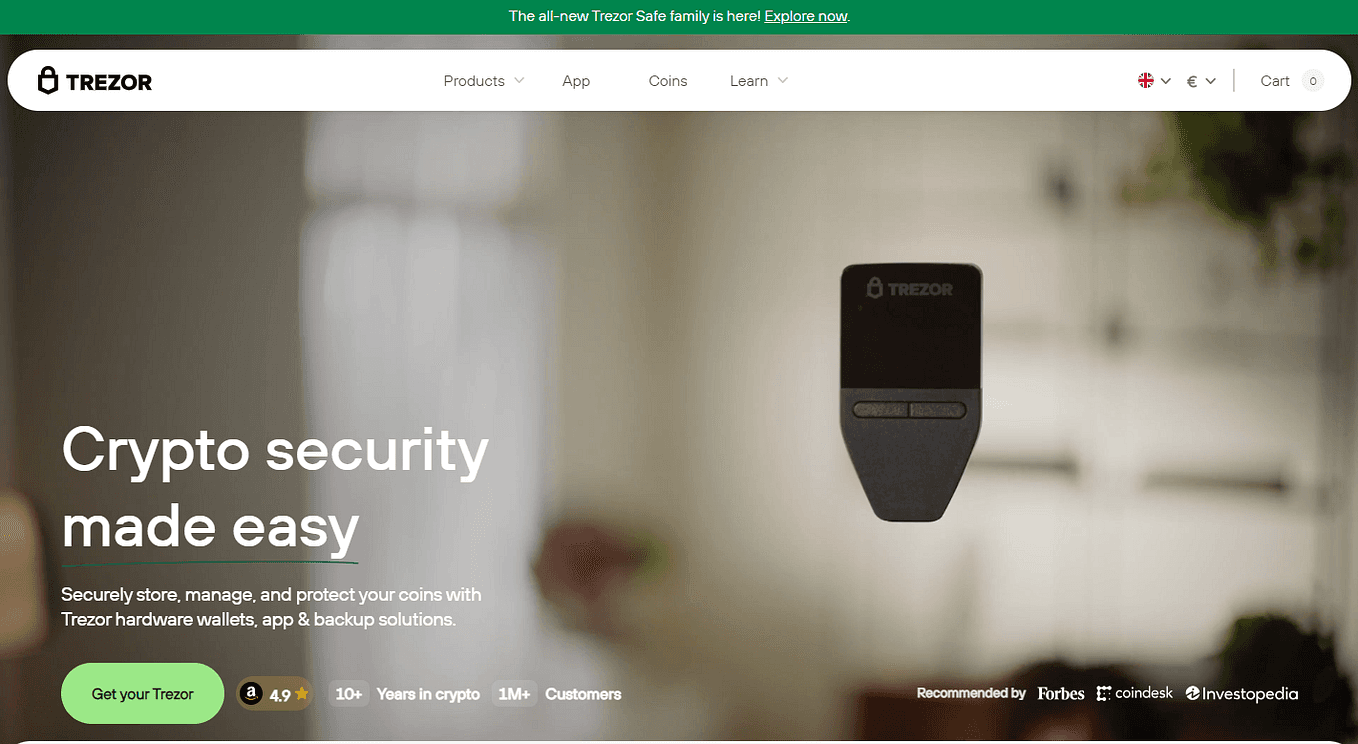
Trezor Login – Your Complete Guide to Secure Access and Wallet Management
Trezor Login is the gateway to accessing and managing your Trezor hardware wallet securely. Unlike traditional online accounts, logging into your Trezor wallet does not involve a username or password in the conventional sense; instead, access is controlled through your hardware device and recovery seed. This guide provides a comprehensive walkthrough of everything you need to know about Trezor Login, from connecting your device to using Trezor Suite, interacting with cryptocurrencies, and maintaining best-in-class security practices. By the end, you will understand how to securely log in, manage your assets, and navigate the ecosystem safely.
Introduction: Why Trezor Login Matters
Cryptocurrency ownership requires both control and security. Unlike centralized exchanges or online wallets, your Trezor device keeps private keys offline, reducing exposure to hacking, phishing, and malware. Logging into your Trezor wallet is therefore more about establishing a secure connection between your hardware wallet and Trezor Suite or compatible software than typing in a traditional password.
Trezor Login enables:
Secure wallet access: Only your device can authorize transactions.
Portfolio management: View balances, transaction history, and account activity.
Crypto transactions: Send, receive, and manage multiple assets safely.
Advanced security features: Passphrase protection, hidden wallets, and recovery options.
Understanding how Trezor Login works is crucial for maintaining control over your digital assets and avoiding scams or accidental loss.
Step 1: Understanding Trezor Login Mechanics
Trezor Login is fundamentally different from conventional online logins. Access is authenticated through the hardware device itself. There is no central server storing your credentials or passwords.
Key points:
Device authentication: Every login requires the Trezor hardware wallet to be connected and unlocked.
PIN verification: Your device requires a personal PIN code to unlock, preventing unauthorized access.
Optional passphrase: For additional security, you can enable a passphrase to create hidden wallets.
Recovery seed: Acts as your ultimate backup, allowing you to restore wallet access if the device is lost or damaged.
This structure ensures that your private keys never leave the hardware device, providing unparalleled security.
Step 2: Setting Up Your Trezor Device for Login
Before you can use Trezor Login, your device must be properly initialized. If you are using a brand-new Trezor, follow these steps:
Connect your Trezor device to your computer or mobile device via USB or compatible connection.
Install Trezor Suite from the official source: Trezor.io/start.
Initialize the device either by creating a new wallet or restoring an existing wallet from a recovery seed.
Set a PIN code that will be required for device access.
Write down your recovery seed on the provided card and store it offline.
Once initialized, your device is ready to be used for Trezor Login and secure crypto management.
Step 3: Connecting to Trezor Suite
Trezor Suite is the official software application for managing your Trezor wallet. Logging in involves connecting your device and unlocking it through your PIN.
Steps for logging in via Trezor Suite:
Open Trezor Suite on your computer or mobile device.
Connect your Trezor device.
Enter your device PIN.
Optionally, enter a passphrase if you have hidden wallets.
Access your dashboard, which displays portfolio overview, accounts, and transaction history.
Unlike traditional web logins, your credentials never leave the device, ensuring end-to-end security.
Step 4: Managing Cryptocurrency Accounts
Once logged in, you can add cryptocurrency accounts in Trezor Suite. Each account corresponds to a blockchain address associated with your hardware wallet.
Steps to add an account:
Navigate to the Accounts section in Trezor Suite.
Click Add Account and select the cryptocurrency.
Confirm the addition on your Trezor device.
Ledger Live or Trezor Suite will then synchronize with the blockchain, allowing you to view balances, transaction histories, and other account details.
Step 5: Sending and Receiving Cryptocurrency
Receiving Cryptocurrency
Select the account you want to receive funds into.
Generate a receiving address in Trezor Suite.
Confirm the address on the Trezor device to ensure it hasn’t been tampered with.
Share the verified address with the sender.
Sending Cryptocurrency
Select the account you want to send from.
Enter the recipient address and amount.
Confirm the transaction details on the Trezor device.
Approve the transaction; it is then broadcast to the blockchain.
Physical confirmation ensures no unauthorized transactions can occur.
Step 6: Using Passphrases and Hidden Wallets
Trezor Login supports optional passphrases to enhance security. A passphrase allows you to create hidden wallets that are separate from your main wallet.
Benefits:
Protect against device theft or loss.
Maintain additional privacy.
Separate funds for different purposes.
How it works:
Enter the passphrase on login.
The device generates a hidden wallet that is cryptographically linked but separate from your main account.
Recovery seed still allows access to all wallets if passphrases are known.
Step 7: Recovery and Restoring Access
If your Trezor device is lost, damaged, or replaced, you can regain access to your wallet through your recovery seed.
Steps:
Obtain a new Trezor device.
Open Trezor Suite and select Recover Wallet.
Enter the 12, 18, or 24-word recovery phrase.
Set a new PIN and optional passphrase.
Recovery allows full access to all accounts and assets, demonstrating why securely storing your recovery seed is essential.
Step 8: Interacting with Web3 and dApps
Trezor Login also facilitates secure interaction with Web3 platforms and decentralized applications (dApps). Using Trezor Suite or third-party integrations like MetaMask:
Connect your Trezor device via WalletConnect.
Approve transactions directly on your device.
Safely interact with smart contracts without exposing private keys.
Always verify smart contract details and site URLs to avoid phishing scams or malicious dApps.
Step 9: Firmware Updates and Security Enhancements
Keeping your Trezor device updated is critical for maintaining secure login and wallet management.
Firmware update steps:
Connect your device to Trezor Suite.
Follow on-screen instructions for firmware updates.
Only install official updates from Trezor.
Updates improve security, performance, and compatibility with new cryptocurrencies or features.
Step 10: Troubleshooting Trezor Login Issues
Common login issues and solutions:
Device not recognized: Check USB cables, ports, and reconnect.
Device locked: Enter the correct PIN; repeated failures may require recovery.
Accounts not visible: Ensure the device is unlocked and Trezor Suite is updated.
Passphrase access issues: Verify the passphrase spelling and character case.
Trezor support documentation offers detailed guidance for resolving login problems safely.
Security Best Practices for Trezor Login
Never share your recovery seed or PIN.
Use passphrases for hidden wallets to enhance privacy.
Verify URLs and websites before connecting your device.
Keep firmware and Trezor Suite updated to prevent vulnerabilities.
Confirm addresses and transaction details on-device before approval.
Following these practices ensures secure access to your wallet and protection against unauthorized access.
Why Trezor Login is Secure and Unique
Trezor Login differs fundamentally from traditional logins:
No username or password stored online.
Authentication requires the physical hardware device.
Transactions require manual approval on-device.
Recovery seed allows wallet restoration without compromising security.
This model reduces exposure to phishing attacks, malware, and centralized failures, making Trezor one of the most secure cryptocurrency wallet options available.
Final Thoughts
Trezor Login is not just a way to access your wallet; it is a critical component of a security-first approach to cryptocurrency management. By using your hardware device in conjunction with Trezor Suite, you maintain full control over your private keys while safely interacting with multiple cryptocurrencies, accounts, and decentralized applications.
From initial setup to advanced security features like passphrases and hidden wallets, understanding Trezor Login empowers you to manage your digital assets confidently. By following best practices—keeping your recovery seed secure, verifying websites, and updating firmware—you ensure that your cryptocurrency remains protected in all scenarios.
Trezor Login is more than authentication—it is your gateway to a secure, flexible, and private crypto experience. With the combination of hardware protection and software integration, you can navigate the cryptocurrency ecosystem safely, efficiently, and with complete peace of mind.